School Projects
No FX Project
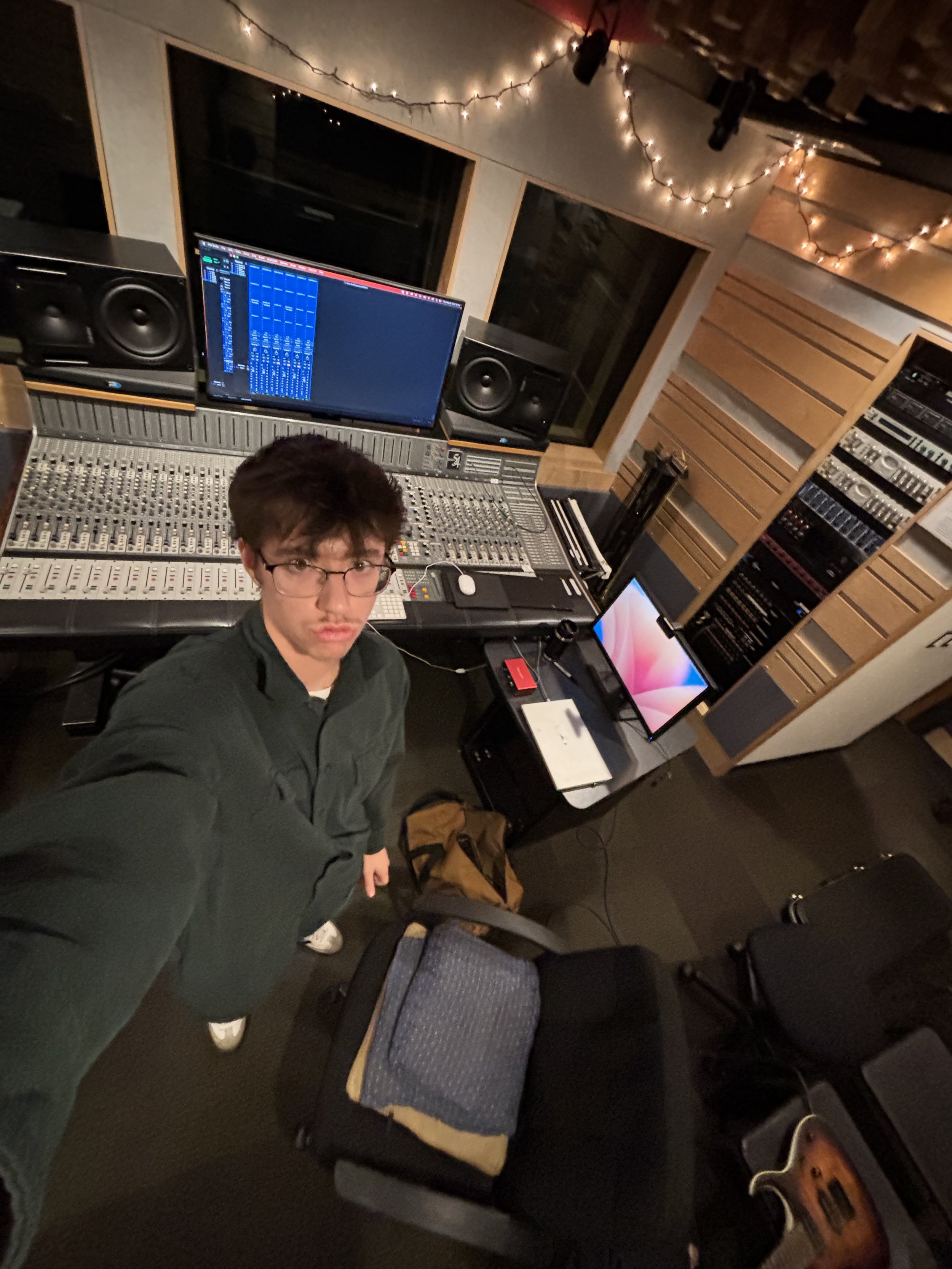
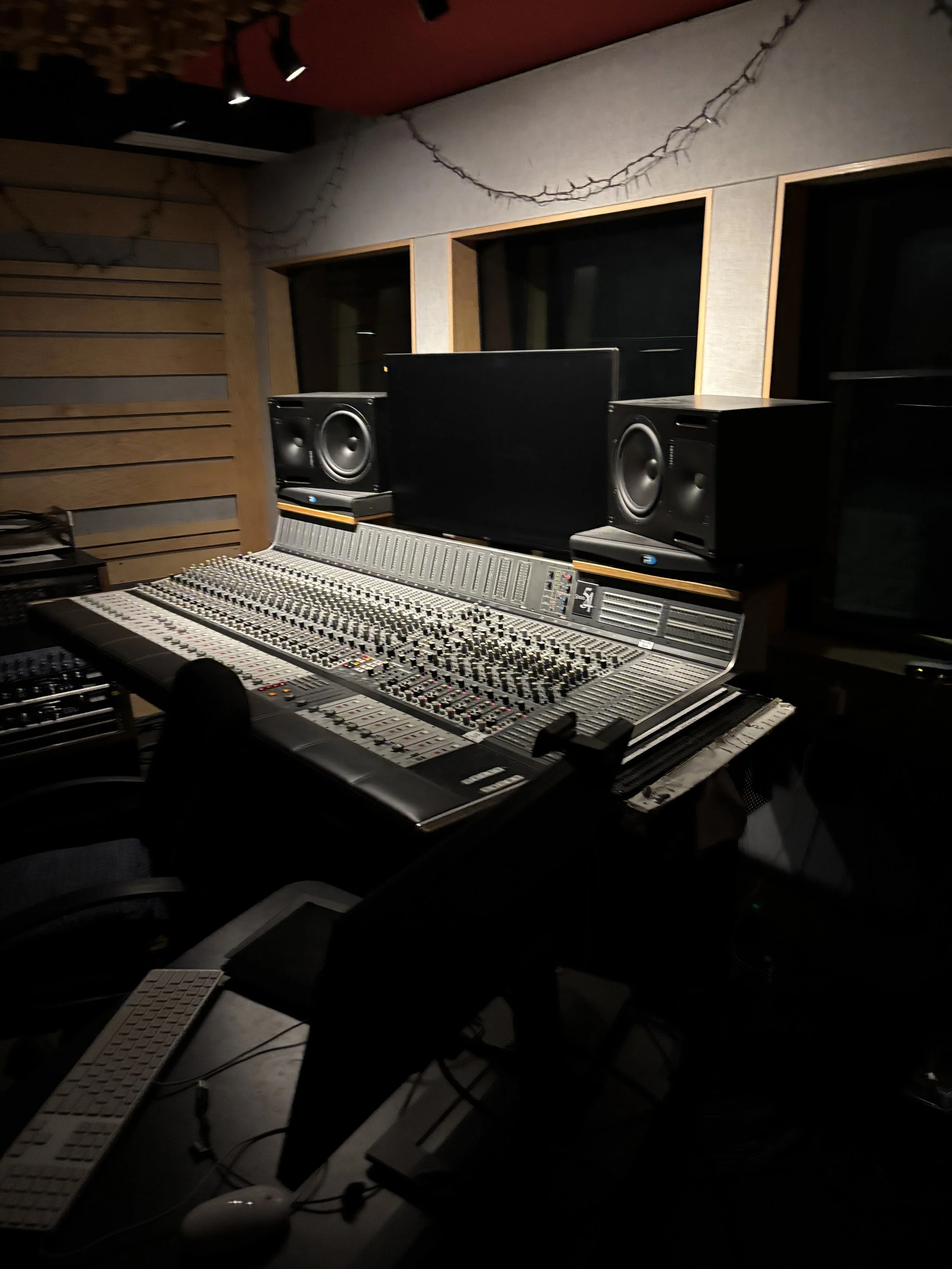
The No FX project is assigned to students during the Advanced Recording Two course in the Multi-Media Arts and Technology Major at Western. During the project, we must create a piece of music without using any studio hardware or software effects. This meant that we needed to be creative when making our compositions. A main thing that my professor wanted us to learn is to find unique ways to get sounds. A big concept that was pushed is the idea of re-amping, which is recording a sound through an external processor and out of an amp. This meant that for this project we were allowed to use guitar pedals and amp effects.
I recorded drums, synths, guitar, and Rhodes piano in Western Sounds Studios. When it came to adding reverb, I opted to record the wet signal in the stairwell around from the studio to achieve a reverb sound. Other ways of getting around the limitations were using a significant amount of volume automation in Pro Tools. This was to achieve a compression effect which would have been hard to mimic elsewhere. For the drums, I had my drummer record one shots of different parts of the drum. For this project I wanted to be ambitious. I was inspired by Daft Punk when creating this project and I wanted to make a song in a similar style. To achieve this, I used my SP404. I took the one shots from the recording session with my drummer and loaded them onto the 404. I then created a drum pattern to my liking and exported it back into Pro Tools. I then recorded the Rhodes piano that sits in WSS and used it as a base layer for the song. After that, I recorded some rhythm guitar to go along with the Rhodes. I used my Moore effect pedal to achieve the desired sound. I then recorded synth lines that I played from the Arturia Micro Freak. To get an additional Daft Punk sound, I processed my voice through the vocoder located in the SP404. I then recorded the guitar solo, once again I used my Moore effect pedal to achieve a sound I liked. The final thing recorded was the vocals. They were recorded in such a way so that it would sound like a chant that would be heard at a party. The only effects used on the project come from the Moore pedal, re-amped reverb, and the SP404. No digital effects were used.
Overall, the project was a great learning experience and showed me how to get creative in making my own effects to create unique sounds. It really made me challenge myself and try to think outside the box on how to achieve a desired effect without relying on the tools I normally use. If I had to improve anything, it would be the vocals. They didn’t come out exactly how I planned, but I do think they add a fun element to the track. The thing I enjoy the most about his track is the guitar solo. Guitar is my main instrument so it is always fun to have it in one of my projects. The solo is two takes put together and it came out very clean.
Live to Two Track
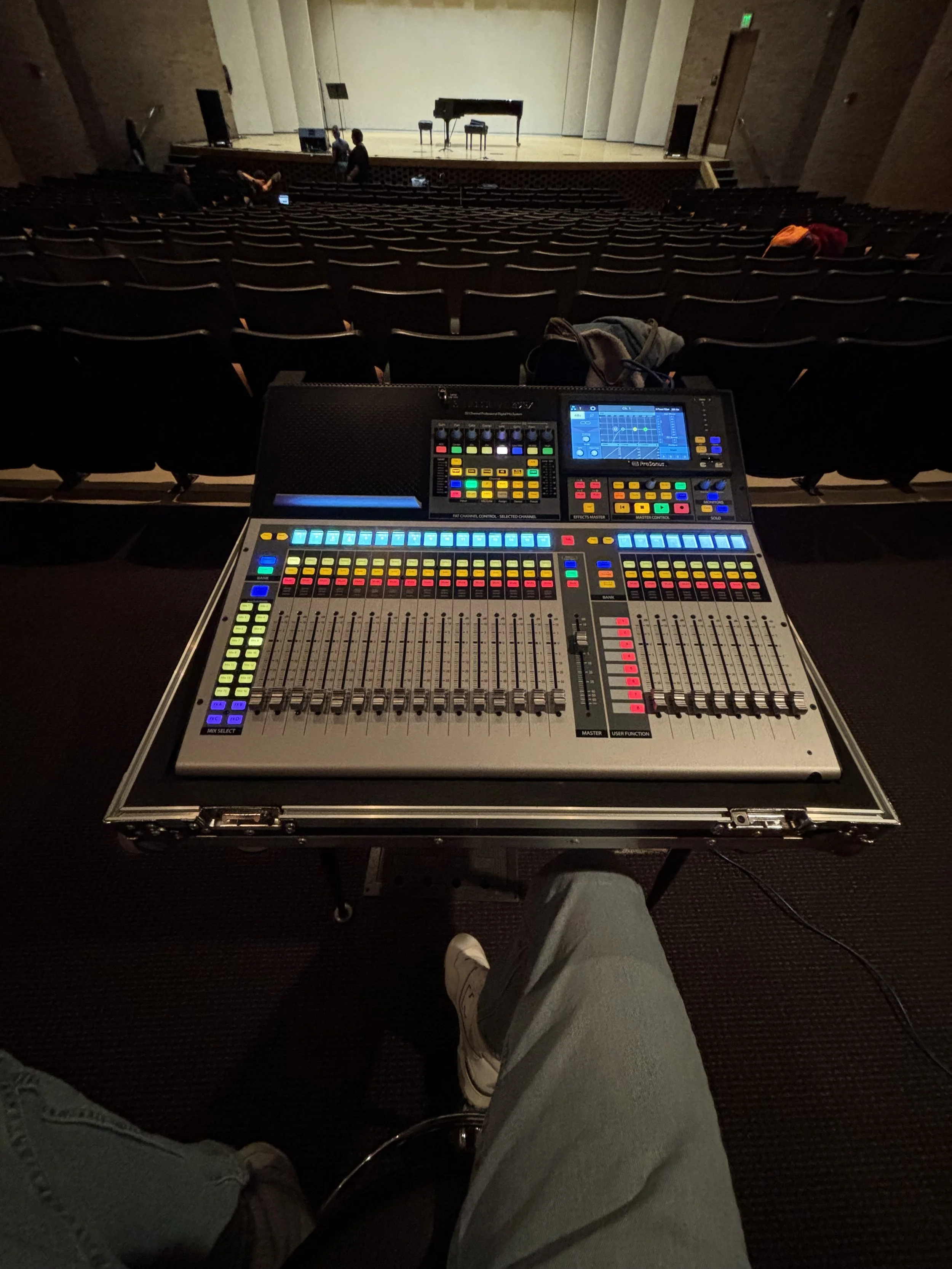
This the second of the two projects that are assigned to us during the Advanced Recording Two class. The objective of this project is to record and mix a band live with the final result being a stereo audio file. Students are allowed to do any song that they would like and they are allowed to have help on the session. The goal of tis is to understand studio routing as well as recording a full band.
I brought in a drummer, a singer, a bass player, and a pianist to do a jazz arrangement based off of Nat King Coles version of For All We Know. The biggest challenge of this project was setting up the session. I needed to contact all of my players to give them the music as well as find a time that works for everyone to record. Luckily, I was able to do this, however, there were some scheduling issues. The session itself took around five hours to set up and take down. I got there early to set everything up to ensure that the routing and the munitions areas were set up. Recording took around three hours and we recorded four versions. After we were done recording I packed everything up. This session was recorded entirely in Western Sound Studios, mixed live, with the final print coming from Pro Tools.
This project taught me a lot about session planning and session work flow. Finding my players as well as music for them turned into a difficult task, but it got even harder when I had to get them all at the same time on the same day. I also learned a lot about setting up for a session as well as general signal flow of a studio. A lot goes into making multiple musicians play at once. Sight lines and headphone mixes need to be established so that each munition is able to have the best performance they can possibly have.
The Cover Project
The cover project is a very important milestone in the Multi-media Arts and Technology Major. It is meant to showcase how much a student has learned from the previous year and a half in the program. The goal of the project is to cover a song with the intention of making it as close as possible to the version. This project proves to be incredibly challenging as we are not allowed to use Western Sound Studios— meaning we must do all recording in a separate Pro Tools lab. Without the access of thousands of dollars of equipment and recording technology, creating this project was very difficult.
A lot of planning and research needed to go in beforehand. The song that I chose for my cover project was A Wolf Who Wears Sheeps Clothes by Mac DeMarco. It was a challenge to record as I needed to find a way to emulate tape recording even though I did not have access to a tape machine. I started by recording drums and guitar. The drums were recorded by my friend, who has done drums for every project here, and the guitar was recorded by me. Something that proved to be a challenge was the fact that this song is not super popular so there are not many guides on how to play specific parts. This meant that everyone who played on the project, including myself, needed to rely on their hearing. Once guitar and drums were finished I went on to bass and percussion. The bass was difficult as my bass player had to figure every part out by ear. I then went on to the vocals. I also needed to find a harmonica player which proved to be surprisingly difficult. Eventually, I found a man from my home town to come to my house and perform the part. Once everything was finished I needed to pitch the entire mix up 50 cents as the version that is released is also pitched up. After months of planning, recording, and mixing I finally finished the project and advanced to the next class in the series.
This project was very informative on what goes into creating a finished fully mixed track. I really needed to understand the full process of what goes into making songs in order to have my covers sound similar to the original. Everything from the reverb to the compression needed to be done to replicate the original track. This was also very helpful in refining my musical hearing. Not only did I need to listen for notes and moldies, but also for what kind of reverb or what effects when on to the original track that I can try to replicate
The Dune Project
Click here to view
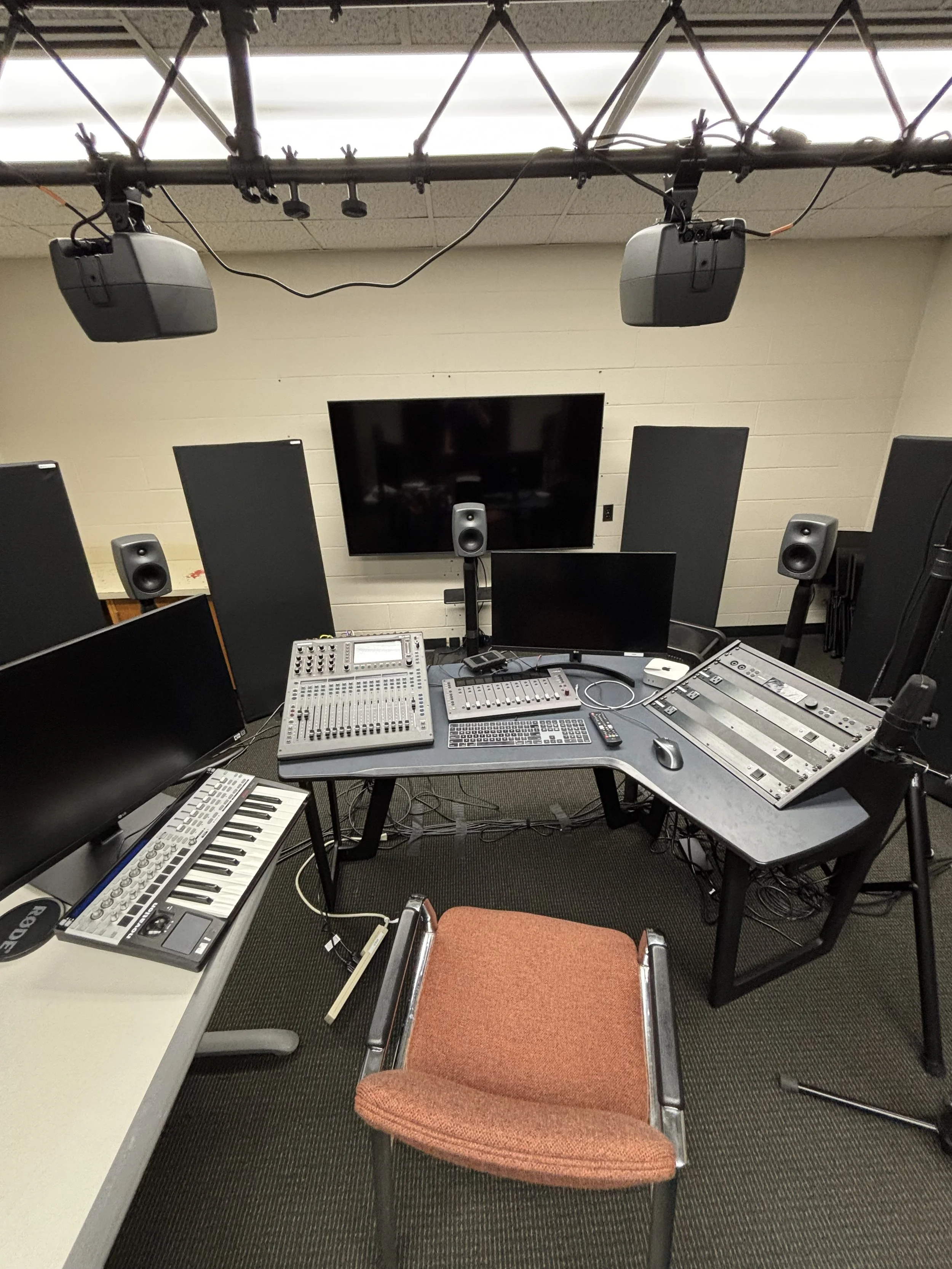
This project is similar to the cover project, however, in a video format. Every year in Audio for Video, a class in the Multi-Media Art and Technology major, students must take a scene from a film, mute it, and re-create all of the audio from scratch. The students do not get to choose the scene, it falls on the professor to find one that will challenge all students and showcase what they have learned in the class. Normally, these scenes come from a science fiction or action movie as they contain a significant amount of sound effects and environments that will be a challenge for students to replicate. This project is less focused on sounding exactly like the original clip and more so on creating professional sounding mixes that are believable given what is happening on screen. These projects also needed to be mixed in the Immersive audio lab at Western in 7.1.2 surround sound.
The scene that we needed to do for this project was from Dune 2, specifically where Paul attacks the emperor. I started out by learning all of the ins and out of Dolby Atmos as we needed to have our final mix in surround sound. Once this was done, I went layer by layer constructing the scene. First, I collect all of the sounds for the background and room tones that would be necessary in the scene. This included wind noises and sand. After this, I did more of the specialized sounds that I could get out of the way quickly. The flag in the wind as well as the missile were the first ones to be completed. I then went and constructed my music. I made the score in FL Studio using Omnisphere as my main synth to create most of the sounds. For an added layer, I recorded a cello player to add an acoustic sound to break up the amount of synths. After this, I began to construct my explosion. The explosion is a compilation of explosions for the Adobe sound effect library as well as synth noises and drones which add together to create a sci-fi explosion. After this, I created the rubbled and derbies noises. This proved to be a challenge but after some searching I found an array of sounds that when put together matched the scene from the movie. I then needed to create the sounds of the rubble hitting the metal roof of the building the characters were in. This was also difficult but after a few days of looking I found some metallic noises that when filtered and added together make the scene sound very realistic. The last thing I did was record all of the vocals and voice lines. This scene proved to be difficult, however, after a month of working, I finished the project.
This project was immensely helpful in teaching me what goes in the world of film audio and sound design. I found out first hand the sheer amount of work that goes into making the audio for these films. I also got to use Dolby Atmos and mix in surround sound which was another helpful experience. I now know how to use Atmos and mix in multiple speaker configurations. I know how to use bed track and object tracks in Atmos to achieve desired effects. Overall, I'm very happy with how this project turned out. If I was to change something, it would be that I would create a better stereo mix. The 7.1.2 mix when it is folded down is not perfect but it still sounds good. Overall this project was very informative on the world of film audio and is an opportunity I hope I can continue to explore.